
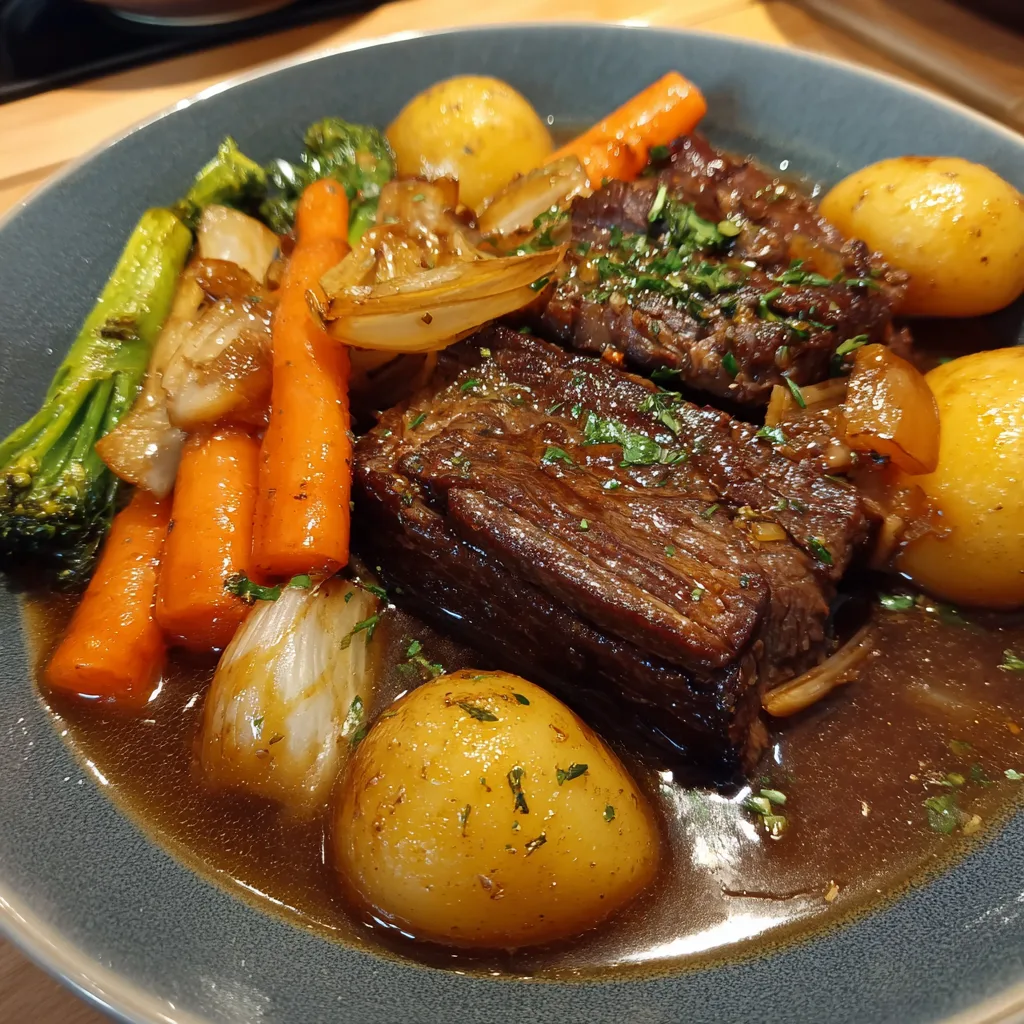
Braised beef and vegetables is one of those timeless dishes that turn simple ingredients into something deeply satisfying. Slow cooking transforms a humble cut of beef into fork-tender bites, while vegetables melt into a rich, fragrant sauce. I have made variations of this recipe countless times, and it never fails to deliver warmth and comfort. Whether you are preparing a weekend family meal or looking for a make-ahead dinner that only gets better with time, this dish fits the occasion. I once tried replacing part of the broth with unsweetened almond milk for a creamier finish, and it surprisingly worked great, adding a subtle nutty note. Braising is also wonderfully forgiving; as long as you follow the low-and-slow approach, the results remain consistently delicious. This recipe highlights classic flavours—herbs, aromatics, and hearty vegetables—coming together in a beautifully slow-simmered stew.
Print
Hearty Braised Beef and Vegetables: A Comfort Classic Done Right
- Total Time: 2 hours 35 minutes
- Yield: 6 servings
- Diet: Halal
Description
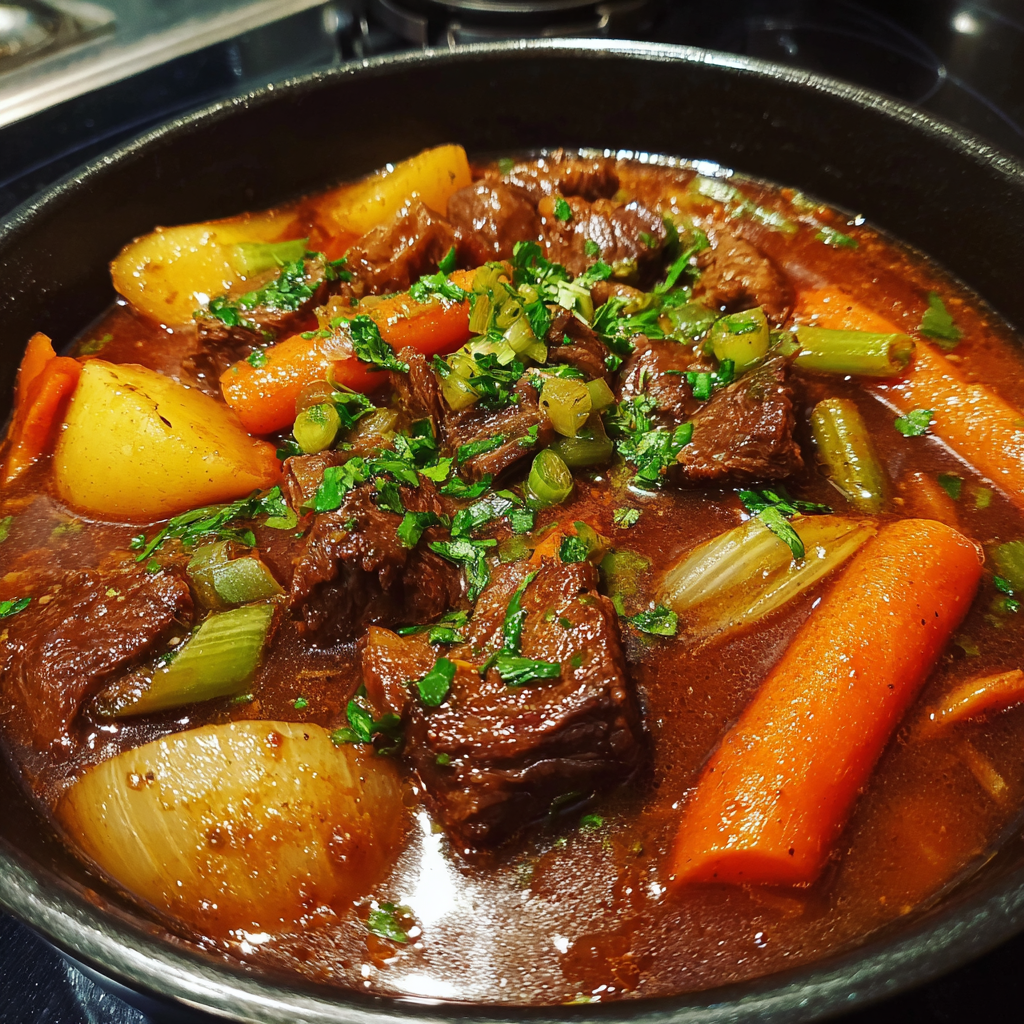
A comforting one-pot meal of tender beef slowly braised with root vegetables in a rich, savory sauce, perfect for a hearty family dinner.
Ingredients
- 2 lb beef chuck, cut into large cubes
- 2 tbsp olive oil
- 1 large onion, chopped
- 3 cloves garlic, minced
- 3 carrots, peeled and cut into chunks
- 3 potatoes, peeled and cubed
- 2 celery stalks, sliced
- 2 cups beef broth
- 1 cup crushed tomatoes
- 2 tbsp tomato paste
- 1 tsp salt
- 1/2 tsp black pepper
- 1 tsp paprika
- 1 tsp dried thyme
- 2 bay leaves
Instructions
- Heat olive oil in a large heavy pot or Dutch oven over medium-high heat.
- Season the beef with salt and pepper, then brown the beef cubes on all sides. Remove and set aside.
- In the same pot, add the onion and sauté until softened, about 5 minutes.
- Add garlic and cook for another 30 seconds until fragrant.
- Stir in tomato paste, paprika, and thyme, cooking briefly to release flavors.
- Return the beef to the pot and add beef broth, crushed tomatoes, and bay leaves.
- Bring to a gentle boil, then reduce heat to low, cover, and simmer for 1½ hours.
- Add carrots, potatoes, and celery, cover again, and simmer for another 45 minutes or until beef and vegetables are tender.
- Adjust seasoning, remove bay leaves, and serve hot.
Notes
- For deeper flavor, prepare a day ahead and reheat before serving.
- You can substitute parsnips or turnips for potatoes.
- Serve with crusty bread or over mashed potatoes.
- Prep Time: 20 minutes
- Cook Time: 2 hours 15 minutes
- Category: Main Course
- Method: Braising
- Cuisine: International
Why You’ll Love This Recipe
This recipe offers deep, layered flavours with minimal hands-on work. Braising tenderises tougher cuts of beef, ensuring moist, flavourful results every time. It is ideal for batch-cooking, family dinners, or cosy nights when you crave nourishing, slow-cooked comfort food.
Ingredients
(Tip: You can find the complete list of ingredients and their measurements in the recipe card below.)
Beef chuck roast
This cut is perfect for braising because it becomes exceptionally tender after long cooking. Its natural marbling adds richness to the sauce.
Carrots
Carrots bring natural sweetness that balances the savoury depth of the beef. They also hold their shape well throughout slow cooking.
Celery
Celery adds an aromatic base and enhances the overall flavour profile. It softens beautifully yet maintains a pleasant texture.
Yellow onion
Onions are essential for sweetness and complexity. As they break down, they help thicken the braising liquid naturally.
Garlic
A few cloves of garlic infuse the dish with warmth and fragrance, especially as they mellow during slow cooking.
Potatoes
Potatoes make the stew heartier and absorb flavours wonderfully. They turn creamy without falling apart if added at the right stage.
Beef broth
Broth forms the foundation of the braising liquid, contributing savouriness and body. A good-quality broth makes a noticeable difference.
Tomato paste
Tomato paste adds acidity and depth, balancing the richness of the beef and creating a robust, well-rounded sauce.
Bay leaves
These leaves release subtle herbal notes that enhance the meat and vegetables as they braise.
Fresh thyme or rosemary
Herbs elevate the aroma and give the dish a rustic, comforting character. Thyme is delicate, while rosemary brings a stronger pine-like flavour.
Olive oil
Used for browning the beef and sautéing vegetables, olive oil builds the first layer of flavour in the pot.
Salt and black pepper
Essential seasonings that enhance each component and allow the deeper flavours to shine through.
Directions
Begin by patting the beef dry and seasoning it generously with salt and black pepper. This helps achieve a superior crust when searing. Heat olive oil in a heavy pot or Dutch oven over medium-high heat, then brown the beef on all sides. Take your time with this step—it sets the foundation for the entire dish. Once browned, transfer the beef to a plate.
In the same pot, add the onion, carrots, and celery, sautéing until they soften and pick up the browned bits from the bottom. Stir in the garlic and tomato paste, cooking briefly until fragrant. Return the beef to the pot and pour in beef broth until it is partially submerged. Add bay leaves and herbs.
Bring the liquid to a gentle simmer, then cover and braise in a low oven or over very low stovetop heat for several hours. About an hour before the cooking time ends, add the potatoes so they maintain their structure. Continue cooking until the beef is fork-tender and the vegetables are soft. Remove herbs and bay leaves before serving. Taste and adjust seasoning as needed.
Equipment needed :
Must-Have Tools to Get Rolling
Here’s what you’ll want to have on hand:
Silicone Spatula – Durable, heat-resistant silicone spatula perfect for mixing, scraping, and spreading. Gentle on non-stick cookware and easy to clean.
Large pot – You’ll need this to boil the whole cabbage head and soften the leaves.
large bowl –Spacious, durable large bowl ideal for mixing, serving, or food preparation. Made from sturdy material and easy to clean.
Sharp knife – For coring the cabbage and slicing out the thick stem in each leaf. A paring knife works best.
Mixing bowl – A big bowl makes it easier to combine your meat and rice filling evenly.
Cutting board – For prepping cabbage leaves and rolling them like a pro.
Full-Size Blender – is a powerful kitchen appliance for making smoothies, soups, and sauces in large batches.
3-in-1 Air Fryer – This versatile 3-in-1 air fryer offers Air Fry for healthier meals with less oil, Bake for bakery-quality desserts and treats, and Reheat to bring leftovers back to life with crispy, flavorful results
Servings and timing
Serves 6
Prep time: 20 minutes
Cook time: 2.5 to 3 hours
Total time: About 3 hours 20 minutes
Storage/reheating
Store leftovers in an airtight container in the refrigerator for up to four days. Reheat gently on the stovetop over low heat, adding a splash of broth if the sauce thickens. This dish also freezes well for up to three months; thaw in the refrigerator overnight before reheating.
Variations and Customizations
Red wine braise
Replace part of the broth with red wine for deeper, richer notes. It creates a more luxurious sauce.
Mushroom addition
Add mushrooms during sautéing for an earthy boost that complements the beef.
Root vegetable swap
Try parsnips, turnips, or rutabaga instead of potatoes for a subtly sweet twist.
Herb blend changes
Experiment with sage or oregano for personalised flavour profiles.
Spiced version
Add smoked paprika or cumin for a warmer, slightly smoky character.
Creamy finish
Stir in a small amount of cream or almond milk at the end for a velvety texture.
Tomato-rich style
Increase the tomato paste and add diced tomatoes for a stew leaning toward Italian flavours.
Slow-cooker option
After searing, transfer everything to a slow cooker and cook on low for 7–8 hours.
Grain pairing
Serve over barley, farro, or buttered noodles instead of potatoes.
Lighter version
Use leaner beef or reduce the oil slightly for a lower-fat variation without sacrificing too much flavour.
FAQs
How do I know when the beef is fully braised?
It should be tender enough to shred easily with a fork.
Can I use a different cut of beef?
Yes, short ribs, brisket, or beef shank work well for braising.
Should I trim the fat from the beef?
Trim excess fat, but leave some for flavour and moisture.
Can I make this dish ahead of time?
Yes, the flavours deepen after a night in the refrigerator.
Can I freeze braised beef and vegetables?
It freezes beautifully for up to three months.
Is it possible to overcook braised beef?
It is difficult but possible; the meat may become stringy if cooked excessively.
Can I use vegetable broth instead of beef broth?
You can, though the flavour will be lighter.
Do I need to sear the beef first?
Searing is highly recommended for developing complex flavour.
Can I thicken the sauce?
Yes, simmer uncovered for a few minutes or add a small cornstarch slurry.
What vegetables work best in braised dishes?
Root vegetables hold up beautifully and absorb flavours well.
Conclusion
Braised beef and vegetables is a timeless, comforting dish that rewards patience with exceptional depth of flavour. The slow-cooking method creates a tender, aromatic meal suitable for family dinners, weekend gatherings, or meal prep. With its versatility and room for creative variations, this recipe invites you to make it your own while preserving the heartiness and warmth that make braised dishes so beloved.