
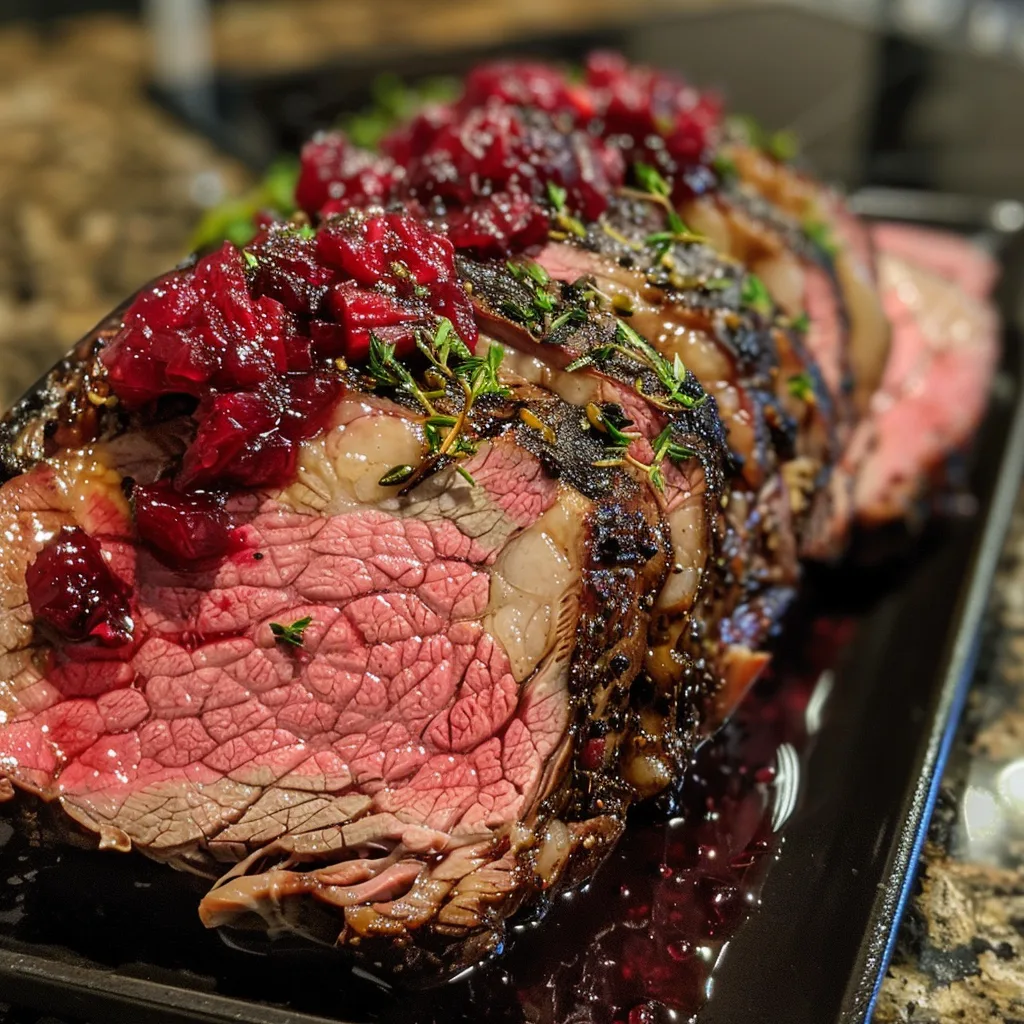
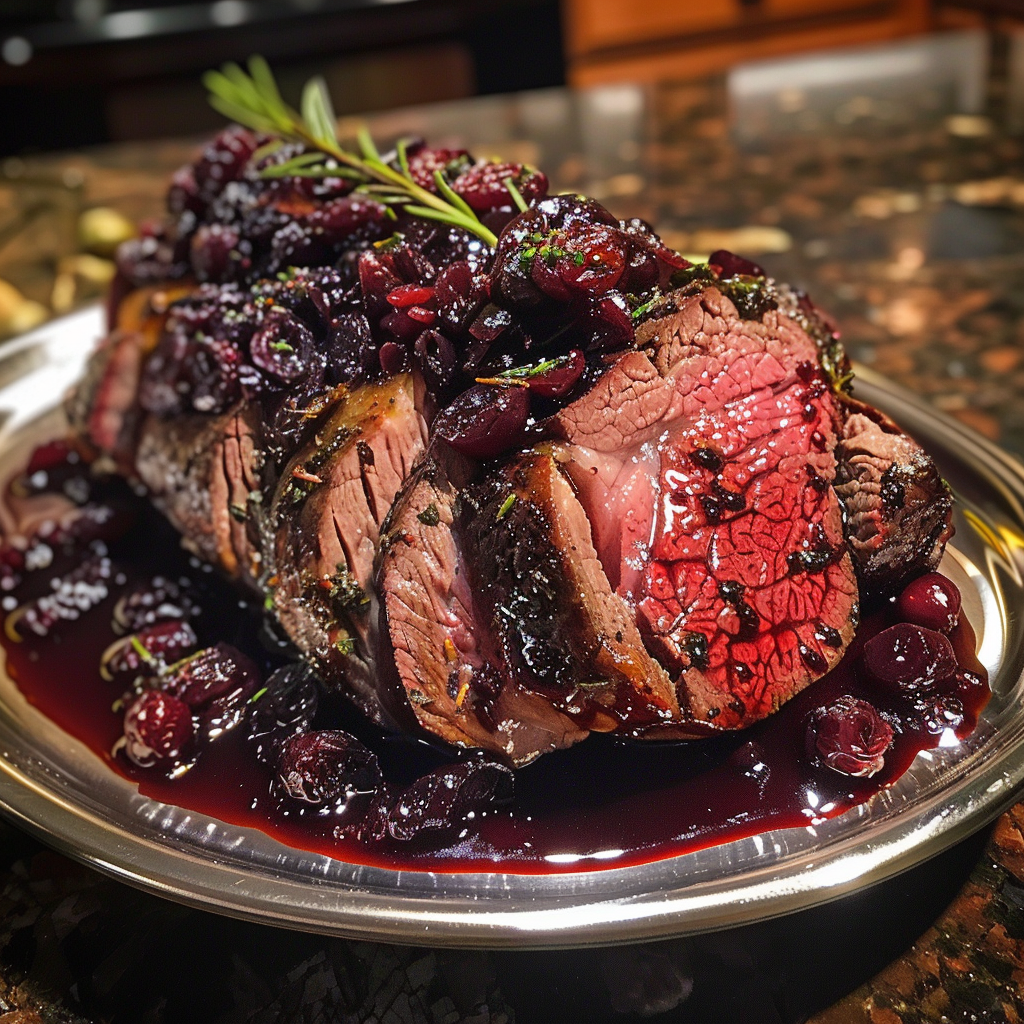
A Ribeye Roast with Cranberry Balsamic Glaze delivers a beautiful balance of richness and bright acidity, creating a centrepiece worthy of any gathering. This roast pairs the marbled tenderness of ribeye with a glossy glaze that brings tart cranberries, mellow sweetness, and deep balsamic notes into perfect harmony. What I enjoy most about this recipe is how effortlessly the glaze transforms a traditional roast into something far more memorable. I once tested the glaze using a bit of pomegranate juice when I ran short on cranberries, and it still produced a wonderfully vibrant finish. The slow roasting method ensures the ribeye remains succulent, while the glaze adds complexity without overpowering the natural flavour of the beef. Whether served for a holiday feast or an elevated weekend dinner, this dish offers both sophistication and comforting warmth, making it an impressive yet approachable option for home cooks.
Print
Show-Stopping Ribeye Roast with Cranberry Balsamic Glaze
- Total Time: 1 hr 45 mins
- Yield: 6–8 servings
- Diet: Halal
Description
A succulent ribeye roast coated in herbs and roasted to perfection, then finished with a tangy-sweet cranberry balsamic glaze for a festive and elegant main dish.
Ingredients
- 3–4 lb ribeye roast
- 2 tbsp olive oil
- 2 tsp kosher salt
- 1 tsp black pepper
- 1 tsp garlic powder
- 1 tsp onion powder
- 1 tbsp fresh rosemary, chopped
- 1 tbsp fresh thyme, chopped
- 1 cup fresh or frozen cranberries
- 1/3 cup balsamic vinegar
- 1/4 cup honey or brown sugar
- 1/3 cup water or beef broth
- 1 tbsp butter
Instructions
- Preheat oven to 450°F (230°C). Pat the ribeye roast dry and rub with olive oil, salt, pepper, garlic powder, onion powder, rosemary, and thyme.
- Place the roast on a rack in a roasting pan and cook at 450°F for 15 minutes to brown.
- Reduce heat to 325°F (165°C) and continue roasting for 1–1.5 hours, or until the internal temperature reaches desired doneness (125°F for medium-rare).
- While roasting, prepare the cranberry balsamic glaze by combining cranberries, balsamic vinegar, honey, and water in a saucepan. Simmer until thickened, about 10–12 minutes, then stir in butter.
- Remove roast from the oven and let rest for 15–20 minutes.
- Slice the ribeye roast and drizzle with warm cranberry balsamic glaze before serving.
Notes
- Use a meat thermometer for best results.
- Glaze can be made ahead and reheated before serving.
- Resting the roast is essential for juicy slices.
- Prep Time: 15 mins
- Cook Time: 1 hr 30 mins
- Category: Main Course
- Method: Roasting
- Cuisine: American
Why You’ll Love This Recipe
This recipe shines because it marries classic roasting technique with a modern, refined glaze. The ribeye remains exceptionally tender thanks to its natural marbling, and the cranberry balsamic reduction adds a festive brightness that cuts beautifully through the richness. It requires relatively little hands-on time, yet the final presentation looks as though it came from a fine dining kitchen. The balance of flavours allows the roast to pair well with a wide range of side dishes.
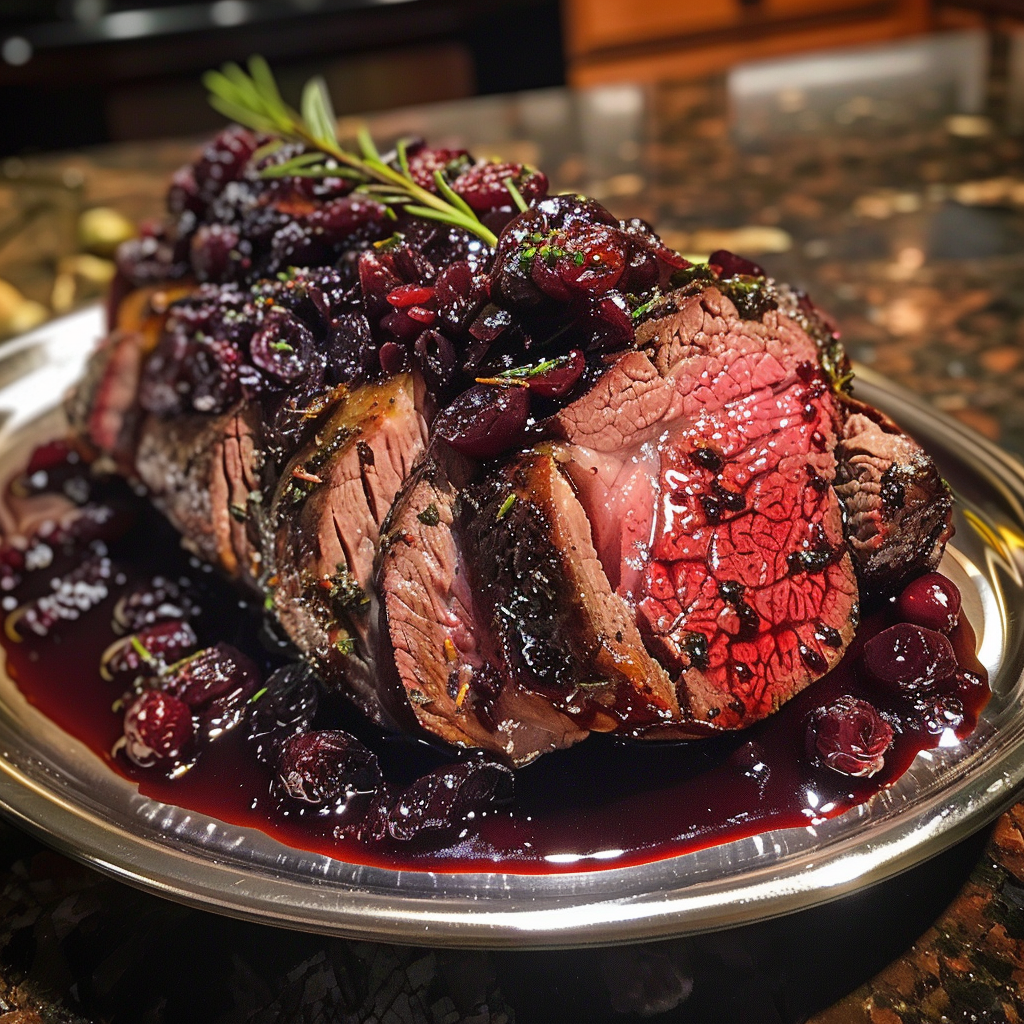
Ingredients
(Tip: You can find the complete list of ingredients and their measurements in the recipe card below.)
Ribeye roast
This cut is naturally tender and well-marbled, producing a juicy, flavourful result even with minimal seasoning. Slow roasting enhances its buttery texture.
Fresh or frozen cranberries
Cranberries provide the tart backbone of the glaze, adding a bright counterpoint to the richness of the meat.
Balsamic vinegar
Balsamic reduces into a glossy, slightly sweet syrup that deepens the glaze’s complexity.
Brown sugar
Brown sugar balances the cranberries’ sharpness and helps the glaze achieve a caramelised sheen.
Beef broth
Broth forms the liquid base for the reduction, intensifying the glaze with savoury depth.
Garlic
Garlic infuses the roast and glaze with aromatic warmth that complements the balsamic beautifully.
Fresh rosemary
Rosemary adds an earthy, herbal fragrance that matches the richness of the ribeye.
Olive oil
Olive oil assists with browning the exterior of the roast and helps distribute seasoning.
Salt and pepper
These fundamentals enhance the natural flavour of the beef and allow the glaze to shine.
Butter
A small amount of butter whisked into the glaze at the end provides a smooth, velvety finish.
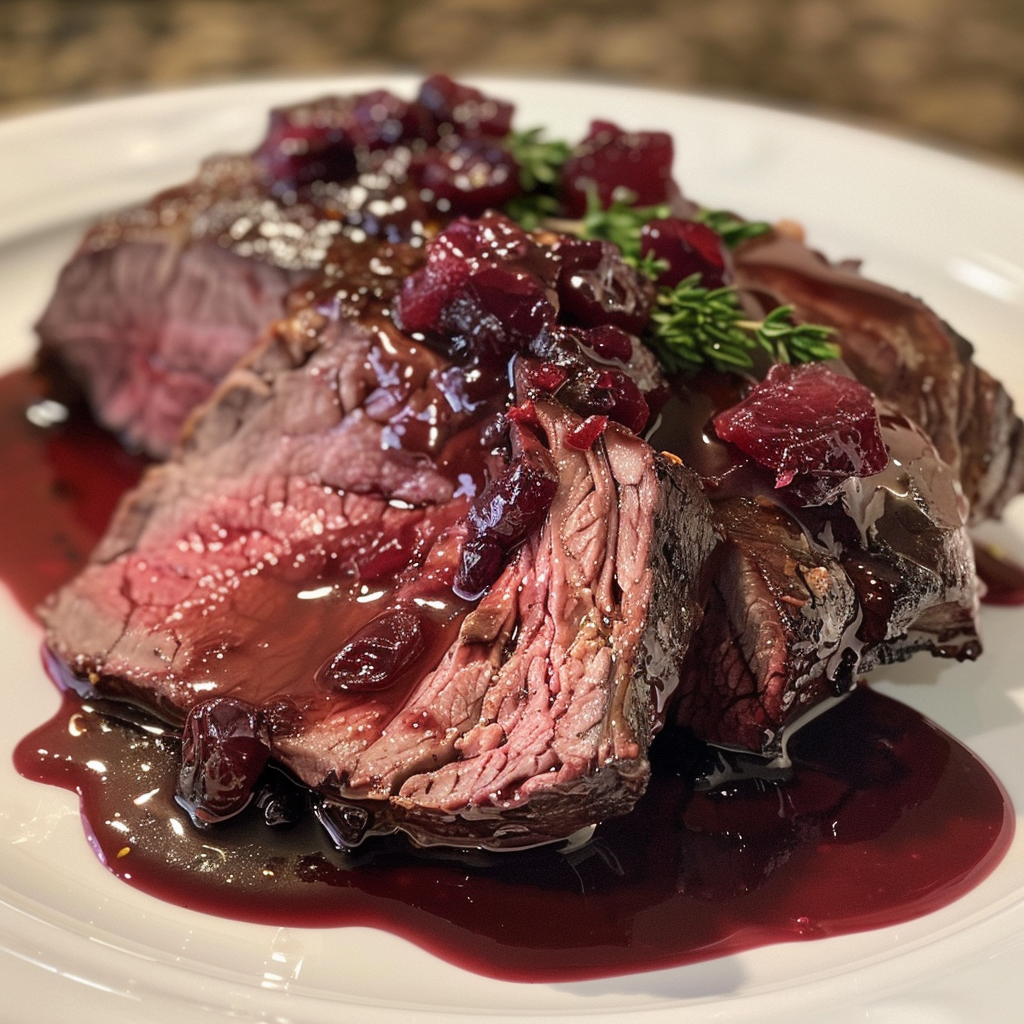
Directions
Begin by preheating the oven and allowing the ribeye roast to come to room temperature, ensuring even cooking. Pat the roast dry and rub it with olive oil, salt, pepper, minced garlic, and chopped rosemary. Place it on a roasting rack inside a sturdy roasting pan. Roast at a higher temperature initially to encourage browning, then reduce the heat to allow the interior to cook gently. While the roast is in the oven, prepare the glaze by combining cranberries, balsamic vinegar, brown sugar, and beef broth in a saucepan. Simmer until the cranberries burst and the mixture thickens into a glossy reduction. Press the glaze through a strainer for a smoother finish if desired. During the final portion of roasting, brush the glaze generously over the ribeye, allowing it to caramelise lightly. Once the roast reaches your preferred internal temperature, remove it from the oven and rest it before slicing. Serve with additional warm glaze drizzled over the top.
Equipment needed
Must-Have Tools to Get Rolling
Here’s what you’ll want to have on hand:
Silicone Spatula – Durable, heat-resistant silicone spatula perfect for mixing, scraping, and spreading. Gentle on non-stick cookware and easy to clean.
Large pot – You’ll need this to boil the whole cabbage head and soften the leaves.
large bowl –Spacious, durable large bowl ideal for mixing, serving, or food preparation. Made from sturdy material and easy to clean.
Sharp knife – For coring the cabbage and slicing out the thick stem in each leaf. A paring knife works best.
Mixing bowl – A big bowl makes it easier to combine your meat and rice filling evenly.
Cutting board – For prepping cabbage leaves and rolling them like a pro.
Full-Size Blender – is a powerful kitchen appliance for making smoothies, soups, and sauces in large batches.
3-in-1 Air Fryer – This versatile 3-in-1 air fryer offers Air Fry for healthier meals with less oil, Bake for bakery-quality desserts and treats, and Reheat to bring leftovers back to life with crispy, flavorful results
Servings and timing
Serves 6–8
Prep time: 15 minutes
Cook time: 1 hour 30 minutes (varies by roast size)
Resting time: 15 minutes
Total time: approximately 2 hours
Storage/reheating
Store leftover roast slices in an airtight container for up to three days. Keep extra glaze separately to maintain optimal texture. Reheat gently in a covered skillet with a splash of broth to prevent drying. You may also reheat in a low oven, wrapped loosely in foil. The glaze can be warmed in a small pan and spooned over the reheated meat.
Variations and Customizations
Citrus-Infused Glaze
Add orange zest or a splash of orange juice to brighten the cranberry glaze with subtle citrus notes.
Herb-Intensive Roast
Increase rosemary and add thyme or sage for a more aromatic profile.
Wine-Enriched Glaze
Replace part of the beef broth with red wine for deeper, more complex flavour.
Spiced Cranberry Glaze
Introduce cinnamon or allspice to create a warm, seasonal glaze.
Garlic-Forward Roast
Double the garlic and insert slivers into small incisions in the roast for bolder savouriness.
Honey-Balsamic Finish
Replace some brown sugar with honey for a softer sweetness and a silkier glaze texture.
Smoky Variation
Add a hint of smoked paprika to the seasoning blend for subtle smokiness.
Mustard-Crusted Ribeye
Rub the roast with Dijon mustard before seasoning to create a flavourful crust.
Pomegranate Twist
Substitute part of the cranberries with pomegranate arils for a slightly sweeter glaze.
Reduced-Sugar Option
Cut back on the brown sugar and rely on the natural tartness of the cranberries for a sharper, more savoury glaze.
FAQs
Can I use a bone-in ribeye roast?
Yes, but expect a longer cooking time. Bone-in roasts often yield even richer flavour.
Can I make the glaze ahead of time?
Yes, prepare it up to two days in advance and reheat gently before serving.
Should I sear the roast first?
It is optional. The initial high-heat roasting stage achieves a similar browning effect.
How do I know when the roast is done?
Use an instant-read thermometer. Medium-rare typically reaches 130–135°F.
Can I replace cranberries with another fruit?
Cherries or pomegranate can work, though the flavour will differ slightly.
Will this recipe work with a different cut of beef?
Yes, sirloin roast or tenderloin can be substituted, but adjust cooking times accordingly.
Can I use dried cranberries instead of fresh?
Fresh or frozen cranberries are recommended; dried cranberries will not break down the same way.
How thick should the glaze be?
It should coat the back of a spoon and continue to thicken slightly as it cools.
Can I cook the roast in a Dutch oven?
Yes, but use a rack or elevate the roast on vegetables to promote even roasting.
How do I keep the roast from drying out?
Do not overcook, allow it to rest, and slice only when ready to serve.
Conclusion
This Ribeye Roast with Cranberry Balsamic Glaze offers both elegance and depth, transforming a classic cut of beef into an unforgettable centrepiece. The glaze brings a vibrant contrast to the rich, buttery ribeye, creating a balanced dish suitable for celebrations or refined weeknight dinners. With thoughtful preparation and simple techniques, this recipe produces restaurant-quality results at home. Whether you follow the traditional version or experiment with the variations, the combination of tender roast and glossy cranberry balsamic glaze is certain to impress.
Hungry for more? Visit our website for full recipes and follow us on Pinterest for daily foodie inspo you’ll love to pin!