
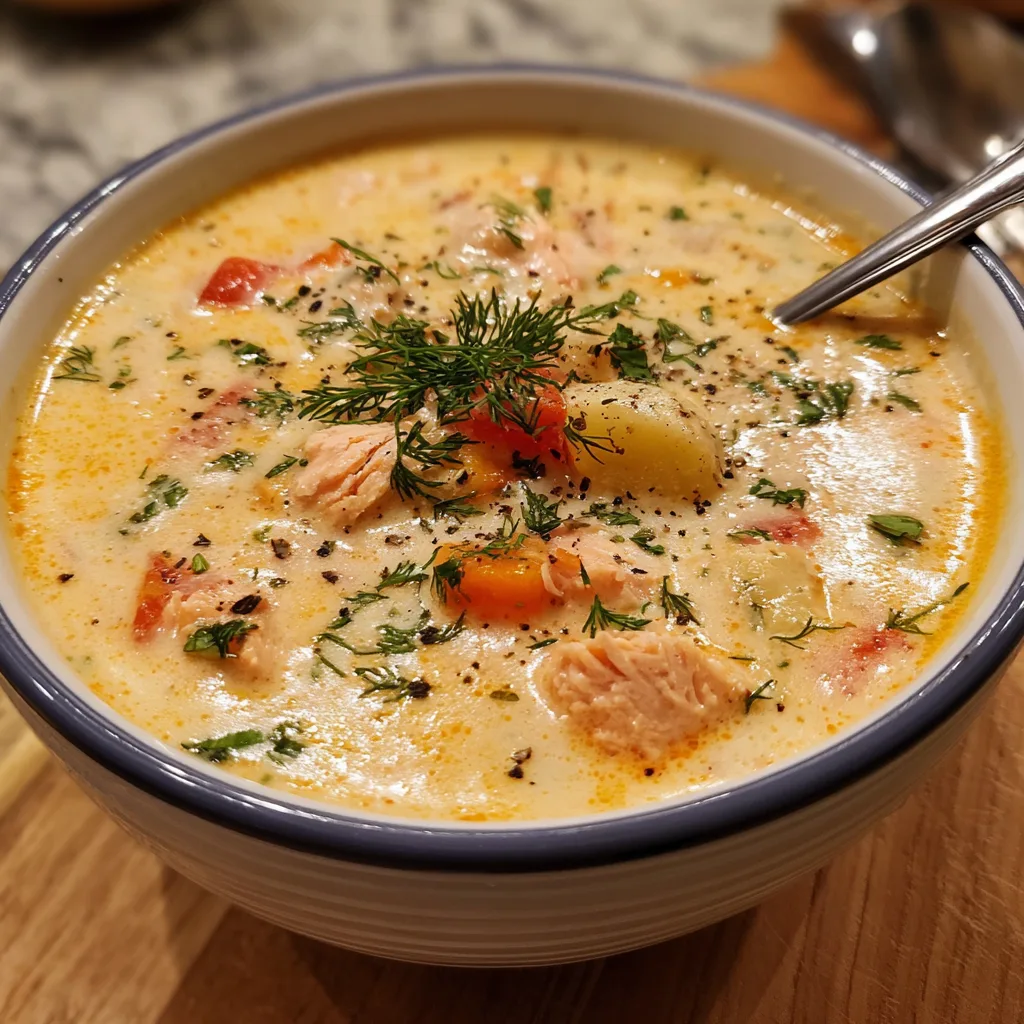
Salmon chowder is one of those timeless comfort dishes that effortlessly blends richness with freshness. Creamy, hearty, and deeply satisfying, it transforms simple ingredients into a luxurious meal suitable for weeknights and special occasions alike. The tender salmon flakes beautifully into the broth while the vegetables provide structure and subtle sweetness. I once tried substituting part of the dairy with unsweetened almond milk, and it worked surprisingly well, giving the chowder a slightly nutty undertone without compromising its velvety texture. This dish fills the kitchen with warmth as it simmers, and its versatility allows you to adapt flavours according to your preferences—whether you like it more herbaceous, spicy, or extra creamy. Its simplicity is part of the charm, proving that wholesome ingredients prepared thoughtfully can result in an extraordinary bowl of comfort.
Print
Creamy Salmon Chowder Recipe: A Rich, Comforting Bowl You’ll Crave Often
Ingredients
Why You’ll Love This Recipe
This chowder is rich yet balanced, combining flaky salmon with creamy broth and tender vegetables. It is approachable for beginners, customisable for experienced cooks, and perfect for cold evenings or anytime you need a nourishing, one-pot meal.
Ingredients
(Tip: You can find the complete list of ingredients and their measurements in the recipe card below.)
Salmon fillets
Salmon adds richness and protein, flaking gently into the chowder for a tender bite.
Potatoes
Potatoes provide body and structure, helping naturally thicken the chowder as they soften.
Carrots
Carrots bring a hint of sweetness and colour, complementing the savoury base.
Celery
A classic aromatic that deepens the broth’s flavour and adds subtle crunch.
Onion
Onion forms the foundation of the chowder, creating a savoury sweetness as it cooks down.
Garlic
Garlic enhances the overall aroma and warms the background flavour.
Butter
Butter helps sauté the aromatics and contributes to the chowder’s velvety richness.
Flour
Used to create a light roux, flour thickens the broth to the traditional chowder consistency.
Fish broth or vegetable broth
This forms the main liquid base, allowing the flavours of the salmon and vegetables to shine.
Heavy cream or half-and-half
Adds indulgent creaminess and balances the savoury notes of the broth.
Bay leaf
Adds subtle herbal depth that enhances seafood-based soups.
Fresh dill or parsley
These herbs brighten the finished dish with freshness and colour.
Salt and pepper
Essential for seasoning each component effectively.
Directions
Begin by melting butter in a large pot over medium heat. Add the onion, carrots, and celery, sautéing until softened and fragrant. Stir in the garlic and cook briefly until aromatic. Sprinkle flour over the vegetables, stirring to form a light roux. Allow it to cook for a minute to remove the raw flavour.
Gradually pour in the broth while whisking to avoid lumps. Add the potatoes and bay leaf, bringing the mixture to a gentle simmer. Cook until the potatoes are tender, allowing the flavours to meld. Once the vegetables are nearly cooked, gently nestle the salmon fillets into the pot. Cover and let them poach in the broth until just cooked through; they will flake easily when done.
Remove the salmon to a plate, flake it into bite-sized pieces, and return it to the chowder. Stir in the cream, adjusting to your preferred level of richness. Season with salt and pepper. Add fresh dill or parsley before serving. Simmer briefly until heated through, then ladle into bowls.
Equipment needed :
Must-Have Tools to Get Rolling
Here’s what you’ll want to have on hand:
Silicone Spatula – Durable, heat-resistant silicone spatula perfect for mixing, scraping, and spreading. Gentle on non-stick cookware and easy to clean.
Large pot – You’ll need this to boil the whole cabbage head and soften the leaves.
large bowl –Spacious, durable large bowl ideal for mixing, serving, or food preparation. Made from sturdy material and easy to clean.
Sharp knife – For coring the cabbage and slicing out the thick stem in each leaf. A paring knife works best.
Mixing bowl – A big bowl makes it easier to combine your meat and rice filling evenly.
Cutting board – For prepping cabbage leaves and rolling them like a pro.
Full-Size Blender – is a powerful kitchen appliance for making smoothies, soups, and sauces in large batches.
3-in-1 Air Fryer – This versatile 3-in-1 air fryer offers Air Fry for healthier meals with less oil, Bake for bakery-quality desserts and treats, and Reheat to bring leftovers back to life with crispy, flavorful results
Servings and timing
Serves 6
Prep time: 15 minutes
Cook time: 30 minutes
Total time: 45 minutes
Storage/reheating
Store leftovers in an airtight container in the refrigerator for up to three days. Reheat gently on the stovetop over low heat to prevent curdling. If the chowder thickens after cooling, add a splash of broth or cream to loosen. Freezing is not recommended due to the dairy content and delicate texture of the salmon.
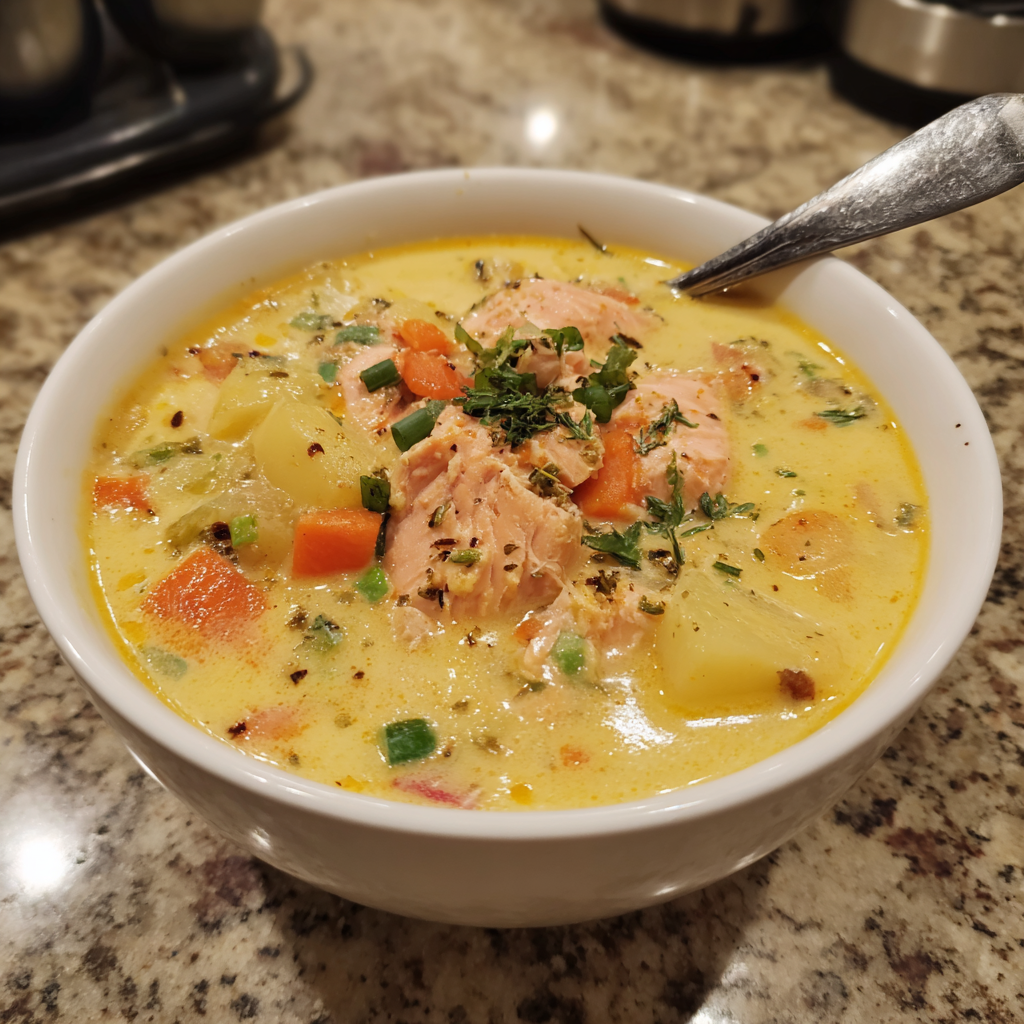
Variations and Customizations
Smoked salmon twist
Use smoked salmon for a deeper, more robust flavour. Reduce added salt, as smoked varieties are naturally salty.
Corn chowder blend
Add sweet corn kernels for extra sweetness and texture, creating a hybrid between classic corn chowder and seafood chowder.
Herb-lovers version
Increase fresh herbs such as dill, thyme, or tarragon for a more aromatic profile.
Lighter dairy option
Use a combination of milk and broth or even part almond milk to reduce richness without losing creaminess.
Vegetable-heavy chowder
Include leeks, spinach, or parsnips for more body and complexity.
Spicy salmon chowder
Stir in crushed red pepper flakes or a spoonful of chili paste to add warmth.
Bacon-enhanced version
Crisp some bacon at the start and sauté the vegetables in the rendered fat for a smoky undertone.
Coconut-based chowder
Replace cream with coconut milk for a dairy-free alternative and a subtle tropical note.
Tomato-infused variation
Add a small amount of tomato paste for acidity and colour, balancing the richness of the cream.
Seafood medley chowder
Include shrimp, clams, or white fish for a more diverse seafood experience.
FAQs
Can I use canned salmon?
Yes, canned salmon works well; just drain it and add toward the end.
Should I remove the salmon skin?
Yes, remove the skin before adding the salmon to the chowder.
Can I make this chowder ahead of time?
Yes, though add the cream shortly before serving for best texture.
What type of potatoes work best?
Waxy potatoes hold their shape well and prevent the chowder from becoming too mushy.
Can I substitute chicken broth?
It is possible, but fish or vegetable broth provides a more complementary flavour.
How do I prevent the chowder from curdling?
Keep the heat low after adding the cream and avoid rapid boiling.
Can I use frozen salmon?
Yes, just thaw completely before cooking.
How thick should the chowder be?
It should be creamy but not overly dense; adjust with broth if necessary.
Can I leave out the flour?
Yes, but the chowder will be thinner. You may thicken it with a slurry instead.
What herbs pair best with salmon chowder?
Dill, parsley, and thyme are excellent options.
Conclusion
Salmon chowder is a beautifully comforting dish that brings together creamy broth, tender vegetables, and delicate flakes of salmon. Its simplicity allows the ingredients to shine, while its versatility ensures it suits a range of tastes and dietary needs. With minimal effort and wholesome flavours, this recipe delivers a satisfying, warming meal ideal for any season. It is a timeless classic worth revisiting again and again.
Hungry for more? Visit our website for full recipes and follow us on Pinterest for daily foodie inspo you’ll love to pin!